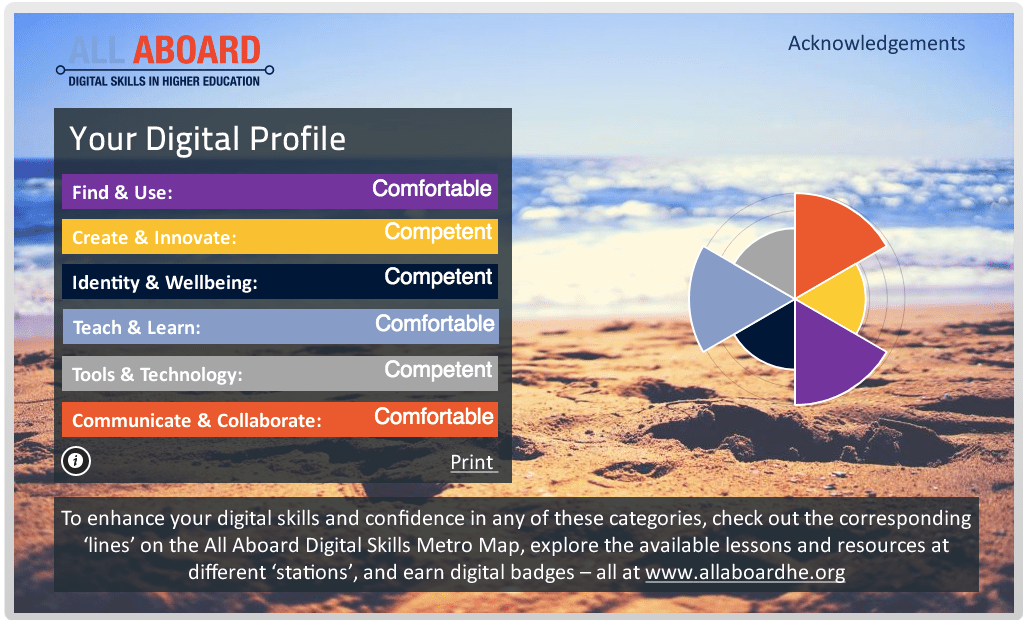
Reflection: The profiling of my digital skill actually helped me identify what i need to work on, because before taking the test i though that i was a fairly confident in using all types of technology and its software applications.
Digital citizenship article and Event
People have become more connected that ever before thanks to the internet. People meet strangers on the other side of the planet and develop closer relationships than with their neighbours. People are also highly influenced by what goes on in other countries due to social media and their cross border friends. They feel like any event that takes place in other countries has an effect on them as well and they could relate to the event taking place and are more influenced by social media than the media on television. This is due to digital citizenship. Digital Citizenship is defined as the responsible use of technology such as computers, the internet, and digital devices to connect with others in society. With the rise of digital interaction, people should become more technologically literate. For example they need to be able to check the credibility of what they are reading and watching, and be able to question it. Also, they should be aware of the algorithms that affect what we see on social media. Nonetheless, people should know who to trust online and who they are building relationships with online because the spread of misinformation is prevalent all over social media. Furthermore they should be able to differentiate between the biased information that is being spread by people that are trying to portray a certain viewpoint from facts. Moreover, the event was exciting because when we did the activity of identifying if it was a skill or a literacy showed how people portray different things based on there perception of the idea. Also the other activity where we were separated into groups brought to light the fact that many people are actually concerned about their security and privacy online and wish to know more to protect their digital identity. Furthermore, they would like to learn more digital skills such as using excel more efficiently and learning how to program or code. Additionally, I learned what digital citizenship is after reading the article and attending the event and the fact that going online and interacting with people is a serious matter in which people must know how to do responsibly, to be able to protect themselves and not harm others.
 Omar Shiha